



BP 2025 (Ph. Eur. 11.6 update)
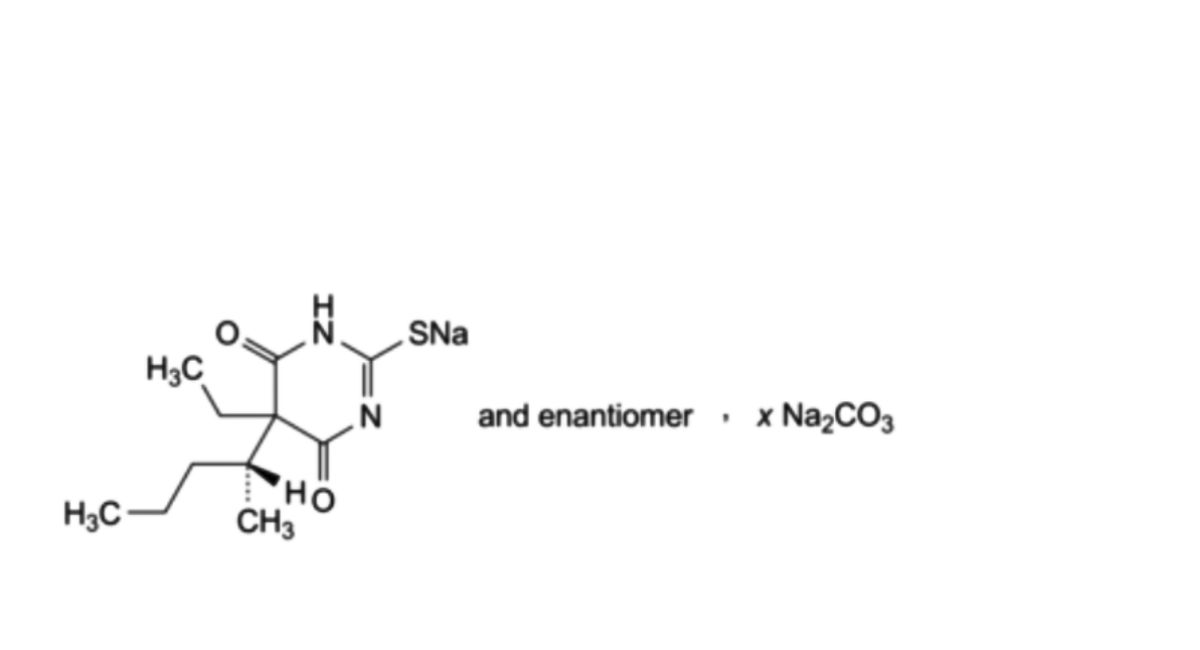
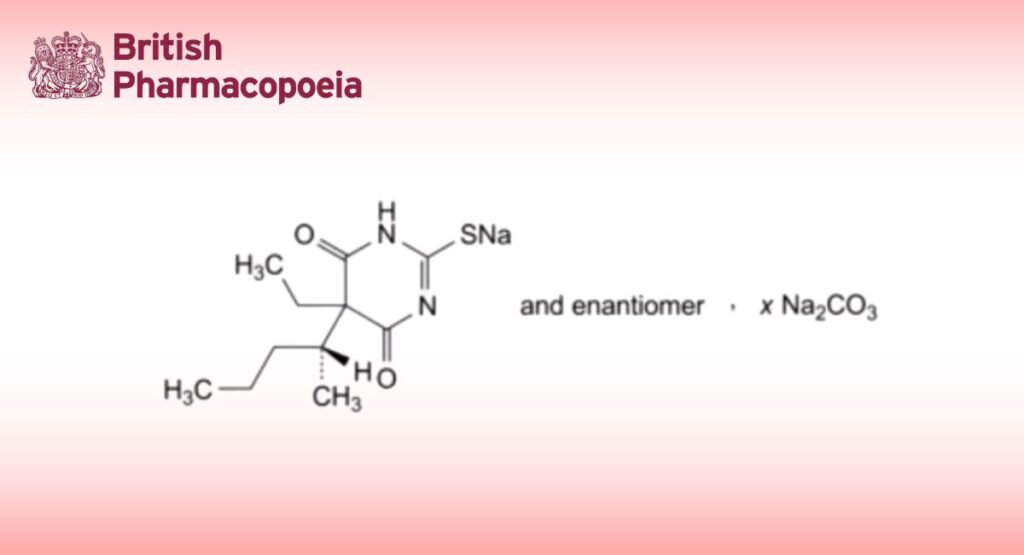
C11H17N2NaO2S,xNa2CO3 264.3 (thiopental sodium)
Thiopental sodium 71-73-8
Action and use
Intravenous barbiturate; general anaesthetic.
Preparation
Thiopental Injection
DEFINITION
Mixture of sodium 5-ethyl-4,6-dioxo-5-[(2RS)-pentan-2-yl]-1,4,5,6-tetrahydropyrimidine-2-thiolate and anhydrous sodium carbonate.
Content
— thiopental: 84.0 per cent to 87.0 per cent (dried substance);
— sodium: 10.2 per cent to 11.2 per cent (dried substance).
CHARACTERS
Appearance
Yellowish-white, hygroscopic powder.
Solubility
Freely soluble in water, partly soluble in anhydrous ethanol, practically insoluble in heptane.
IDENTIFICATION
First identification A, B, D.
Second identification A, C, D.
A. Melting point (2.2.14).
Determination A Acidify 10 mL of solution S (see Tests) with dilute hydrochloric acid R. An effervescence is produced. Shake with 20 mL of 1,1-dimethylethyl methyl ether R. Separate the upper layer, wash with 10 mL of water R, dry over anhydrous sodium sulfate R and filter. Evaporate the filtrate to dryness and dry the residue at 100-105 °C. Determine the melting point of the residue.
Result A About 160 °C.
Determination B Mix equal parts of the residue obtained in determination A and thiopental for ID and assay CRS and determine the melting point of the mixture.
Result B The absolute difference between the melting point of the mixture and the value obtained in determination A is not greater than 2 °C.
B. Infrared absorption spectrophotometry (2.2.24).
Preparation Use the residue obtained in Identification test A.
Comparison thiopental for ID and assay CRS.
C. Thin-layer chromatography (2.2.27).
Test solution Dissolve 0.1 g of the substance to be examined in water R and dilute to 100 mL with the same solvent.
Reference solution Dissolve 85 mg of thiopental for ID and assay CRS in 10 mL of dilute sodium hydroxide solution R and dilute to 100 mL with water R.
Plate TLC silica gel GF254 plate R.
Mobile phase concentrated ammonia R, ethanol (96 per cent) R, methylene chloride R (5:15:80 V/V/V); use the lower layer.
Application 10 μL.
Development Over 3/4 of the plate.
Detection Examine immediately in ultraviolet light at 254 nm.
Results The principal spot in the chromatogram obtained with the test solution is similar in position and size to the principal spot in the chromatogram obtained with the reference solution.
D. It gives reaction (a) of sodium (2.3.1).
TESTS
Solution S
Dissolve 5.0 g in carbon dioxide-free water R and dilute to 50 mL with the same solvent.
Appearance of solution
Solution S is clear (2.2.1) and not more intensely coloured than reference solution GY3 (2.2.2, Method II).
pH (2.2.3)
10.6 to 11.2.
Dissolve 0.800 g in carbon dioxide-free water R and dilute to 10 mL with the same solvent.
Related substances
Liquid chromatography (2.2.29). Prepare the solutions immediately before use.
Test solution Dissolve 20.0 mg of the substance to be examined in the mobile phase and dilute to 20.0 mL with the mobile phase.
Reference solution (a) Dilute 1.0 mL of the test solution to 100.0 mL with the mobile phase. Dilute 1.0 mL of this solution to 10.0 mL with the mobile phase.
Reference solution (b) Dissolve 17.0 mg of thiopental for ID and assay CRS in the mobile phase and dilute to 20.0 mL with the mobile phase.
Reference solution (c) Dissolve the contents of a vial of thiopental impurity mixture CRS (impurities A, B, C and D) in 1 mL of the test solution.
Column:
— size: l = 0.15 m, Ø = 4.6 mm;
— stationary phase: base-deactivated end-capped octadecylsilyl silica gel for chromatography R (5 μm).
Mobile phase acetonitrile for chromatography R, 1 g/L solution of phosphoric acid R (35:65 V/V).
Flow rate 1 mL/min.
Detection Spectrophotometer at 225 nm.
Injection 10 μL of the test solution and reference solutions (a) and (c).
Run time Twice the retention time of thiopental.
Identification of impurities Use the chromatogram supplied with thiopental impurity mixture CRS and the chromatogram obtained with reference solution (c) to identify the peaks due to impurities A, B, C and D.
Relative retention With reference to thiopental (retention time = about 19 min): impurity A = about 0.40; impurity B = about 0.45; impurity C = about 0.92; impurity D = about 1.34.
System suitability Reference solution (c):
— resolution: minimum 1.5 between the peaks due to impurities A and B; minimum 1.5 between the peaks due to impurity C and thiopental.
Calculation of percentage contents:
— correction factors: multiply the peak areas of the following impurities by the corresponding correction factor: impurity B = 1.6; impurity D = 1.9;
— for each impurity, use the concentration of thiopental sodium and sodium carbonate in reference solution (a).
Limits:
— impurity B: maximum 1.0 per cent;
— impurity D: maximum 0.5 per cent;
— unspecified impurities: maximum 0.10 per cent;
— total: maximum 2.0 per cent;
— reporting threshold: 0.05 per cent.
Chlorides (2.4.4)
Maximum 330 ppm.
To 5 mL of solution S add 35 mL of water R and 10 mL of dilute nitric acid R. Shake with 3 quantities, each of 25 mL, of 1,1-dimethylethyl methyl ether R and discard the upper layer. Eliminate the organic solvent from the lower layer by heating on a water-bath. 15 mL of this solution complies with the test for chlorides.
Loss on drying (2.2.32)
Maximum 2.5 per cent, determined on 0.500 g by drying in vacuo at 100 °C for 4 h.
ASSAY
Sodium
Dissolve 0.400 g in 30 mL of water R. Add 0.1 mL of methyl red solution R and titrate with 0.1 M hydrochloric acid until a red colour is obtained. Boil gently for 2 min. Allow to cool and, if necessary, continue the titration with 0.1 M hydrochloric acid until the red colour is again obtained.
1 mL of 0.1 M hydrochloric acid is equivalent to 2.299 mg of Na.
Thiopental
Liquid chromatography (2.2.29) as described in the test for related substances with the following modification.
Injection Test solution and reference solution (b).
Calculate the percentage content of C11H18N2O2S taking into account the assigned content of thiopental for ID and assay CRS.
STORAGE
In an airtight container, protected from light.
IMPURITIES
Specified impurities B, D.
Other detectable impurities (the following substances would, if present at a sufficient level, be detected by one or other of the tests in the monograph. They are limited by the general acceptance criterion for other/unspecified impurities and/or by the general monograph Substances for pharmaceutical use (2034). It is therefore not necessary to identify these impurities for demonstration of compliance. See also 5.10. Control of impurities in substances for pharmaceutical use) A, C.
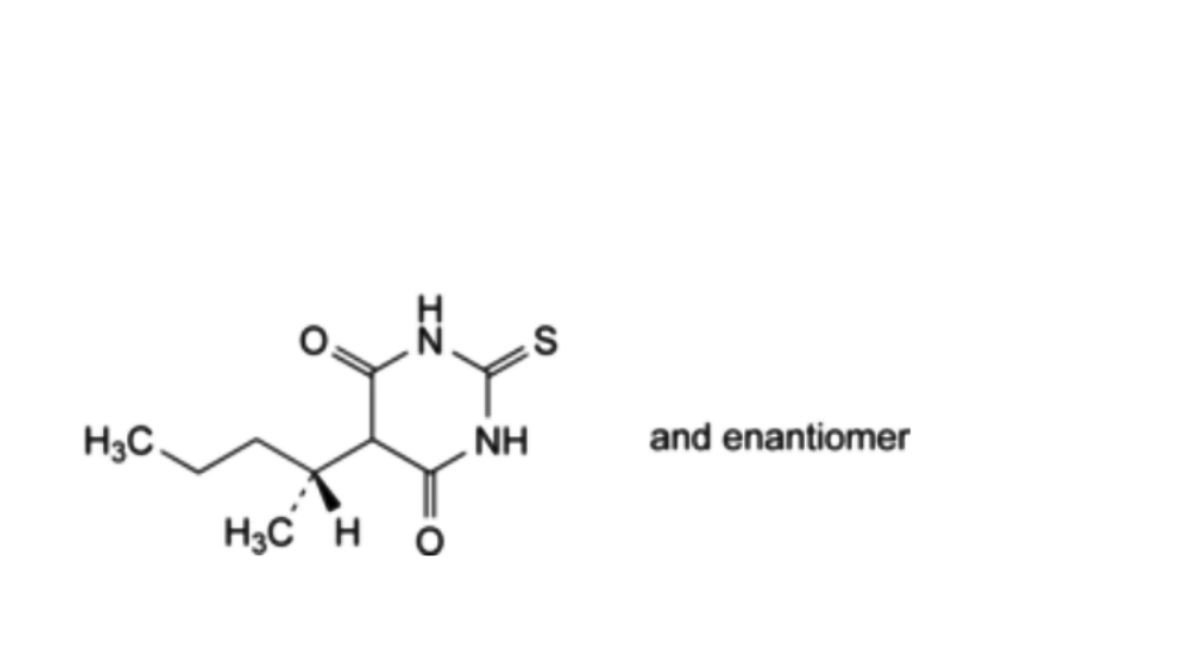
A. 5-[(2RS)-pentan-2-yl]-2-sulfanylidene-1,3-diazinane-4,6-dione,
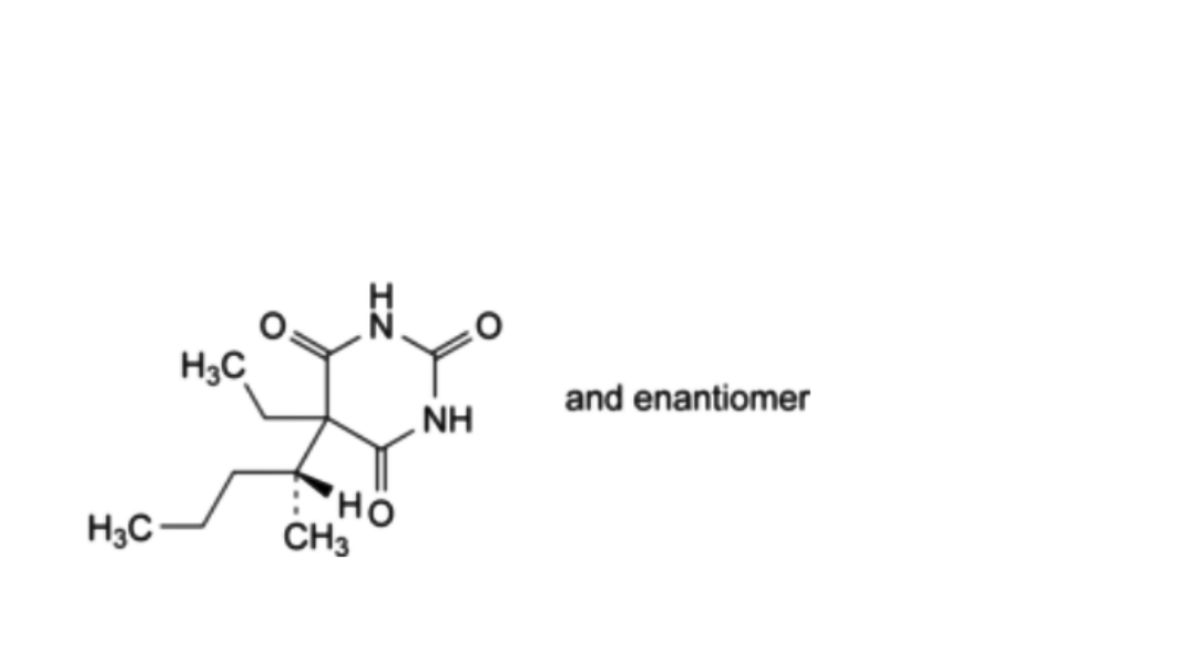
B. 5-ethyl-5-[(2RS)-pentan-2-yl]-1,3-diazinane-2,4,6-trione (pentobarbital),
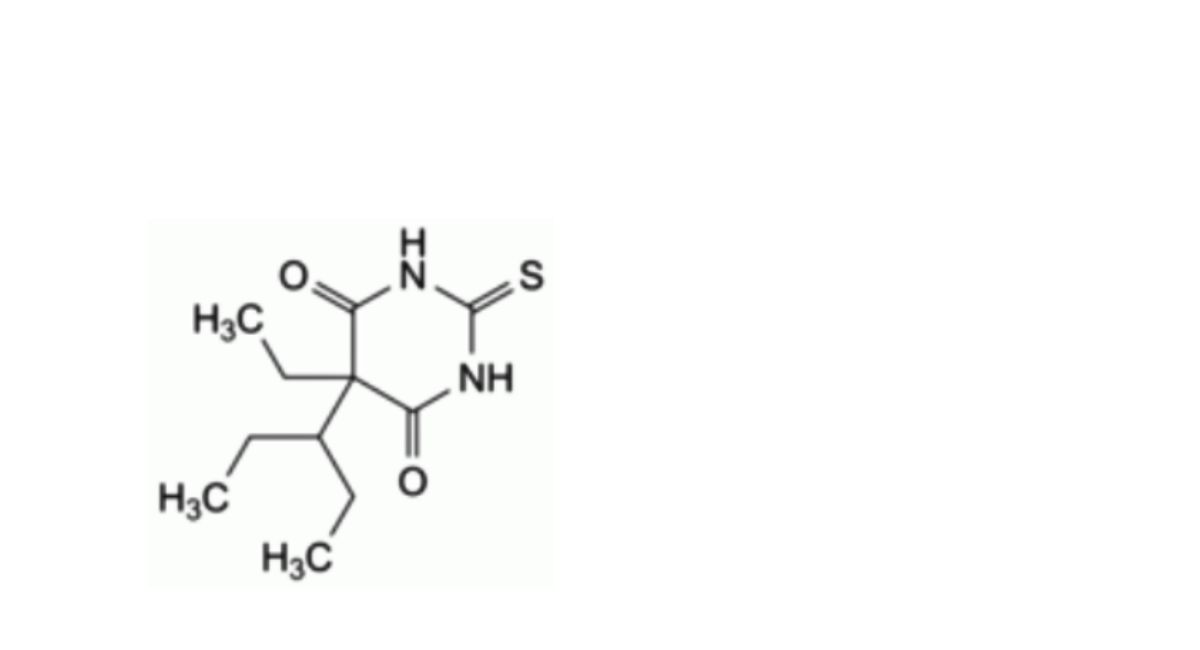
C. 5-ethyl-5-(pentan-3-yl)-2-sulfanylidene-1,3-diazinane-4,6-dione,
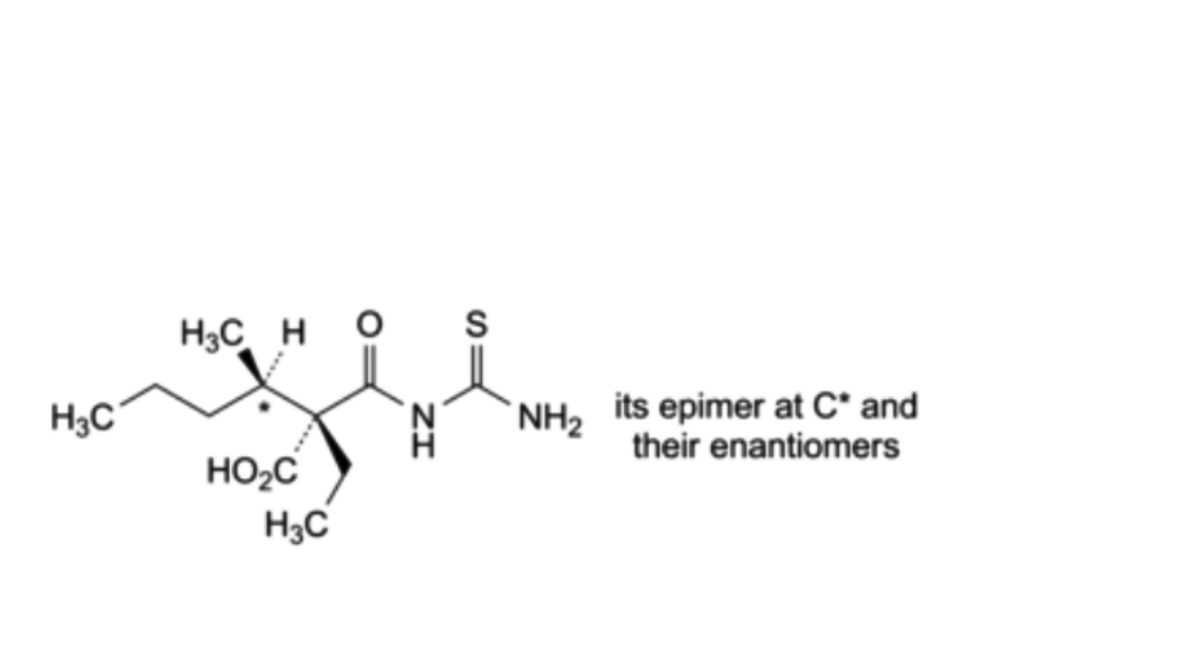
D. mixture of the 4 stereoisomers of (2Ξ,3Ξ)-2-(carbamothioylcarbamoyl)-2-ethyl-3-methylhexanoic acid.


