



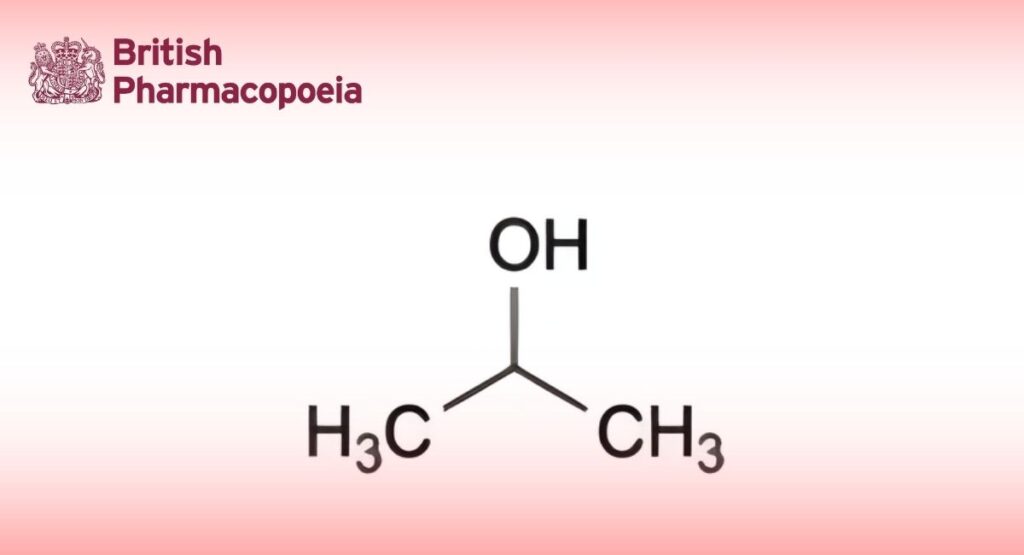
(Ph. Eur. monograph 0970)
C3H8O 60.1 67-63-0
DEFINITION
Propan-2-ol.
CHARACTERS
Appearance
Clear, colourless liquid.
Solubility
Miscible with water and with ethanol (96 per cent).
IDENTIFICATION
First identification: B, C.
Second identification: A, B, D.
A. Relative density (2.2.5): 0.785 to 0.789.
B. Refractive index (2.2.6): 1.376 to 1.379.
C. Infrared absorption spectrophotometry (2.2.24).
Comparison isopropyl alcohol CRS.
D. To 1 mL add 4 mL of water R and mix. Carefully add 2 mL of a 10 g/L solution of dimethylaminobenzaldehyde R in sulfuric acid R, ensuring that the liquids do not mix; a bright reddish-violet ring forms immediately at the junction of the 2 liquids. After 2-5 min, the entire sulfuric acid layer turns violet.
TESTS
Appearance
The substance to be examined is clear (2.2.1) and colourless (2.2.2, Method II). Dilute 1 mL to 20 mL with water R. After 5 min, the solution is clear (2.2.1).
Acidity or alkalinity
Gently boil 25 mL for 5 min. Add 25 mL of carbon dioxide-free water R and allow to cool protected from carbon dioxide in the air. Add 0.1 mL of phenolphthalein solution R. The solution is colourless. Not more than 0.6 mL of 0.01 M sodium hydroxide is required to change the colour of the indicator to pale pink.
Absorbance (2.2.25)
Maximum 0.30 at 230 nm, 0.10 at 250 nm, 0.03 at 270 nm, 0.02 at 290 nm and 0.01 at 310 nm.
The absorbance is measured between 230 nm and 310 nm using water R as the compensation liquid. The spectrum shows a steadily descending curve with no observable peaks or shoulders.
Benzene and related substances
Gas chromatography (2.2.28).
Test solution (a): The substance to be examined.
Test solution (b): Dilute 1.0 mL of 2-butanol R1 to 50.0 mL with test solution (a). Dilute 5.0 mL of this solution to 100.0 mL with test solution (a).
Reference solution (a): Dilute 0.5 mL of 2-butanol R1 and 0.5 mL of propanol R to 50.0 mL with test solution (a). Dilute 5.0 mL of this solution to 50.0 mL with test solution (a).
Reference solution (b): Dilute 100 μL of benzene R to 100.0 mL with test solution (a). Dilute 0.20 mL of this solution to 100.0 mL with test solution (a).
Column:
— material: fused silica;
— size: l = 30 m, Ø = 0.32 mm;
— stationary phase: cyanopropyl(3)phenyl(3)methyl(94)polysiloxane R (film thickness 1.8 μm).
Carrier gas helium for chromatography R.
Auxiliary gas nitrogen for chromatography R or helium for chromatography R.
Linear velocity 35 cm/s.
Split ratio 1:5.
Temperature:
| Time
(min) |
Temperature
(°C) |
|
| Column | 0 – 12 | 40 |
| 12 – 32 | 40 → 240 | |
| 32 – 42 | 240 | |
| Injection port | 280 | |
| Detector | 280 |
Detection: Flame ionisation.
Injection: 1 μL.
Retention time: Benzene = about 10 min.
System suitability: Reference solution (a):
— resolution: minimum 10 between the 1 peak (propanol) and the 2 peak (2-butanol).
Limits:
— benzene (test solution (a)): not more than 0.5 times the area of the corresponding peak in the chromatogram obtained with reference solution (b) (2 ppm), after the sensitivity has been adjusted so that the height of the peak due to benzene in the chromatogram obtained with reference solution (b) represents at least 10 per cent of the full scale of the recorder;
— total of impurities apart from 2-butanol (test solution (b)): not more than 3 times the area of the peak due to 2- butanol in the chromatogram obtained with test solution (b) (0.3 per cent), after the sensitivity has been adjusted so that the height of the 2 peaks following the principal peak in the chromatogram obtained with reference solution (a) represents at least 50 per cent of the full scale of the recorder.
Peroxides
In a 12 mL test-tube with a ground-glass stopper and a diameter of about 15 mm, introduce 8 mL of potassium iodide and starch solution R. Fill completely with the substance to be examined. Shake vigorously and allow to stand protected from light for 30 min. No colour develops.
Non-volatile substances
Maximum 20 ppm.
Evaporate 100 g to dryness on a water-bath after having verified that it complies with the test for peroxides and dry in an oven at 100-105 °C. The residue weighs a maximum of 2 mg.
Water (2.5.12)
Maximum 0.5 per cent, determined on 5.0 g.
STORAGE
Protected from light.
IMPURITIES
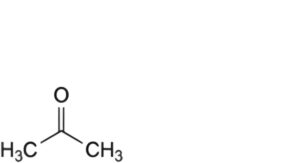
A. propanone (acetone),
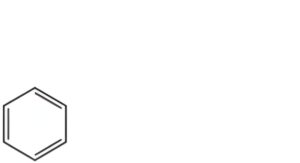
B. benzene,
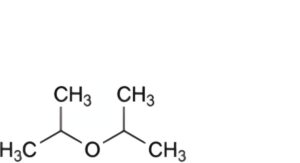
C. 2-(1-methylethoxy)propane (diisopropyl ether),
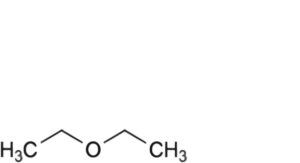
D. ethoxyethane (diethyl ether),
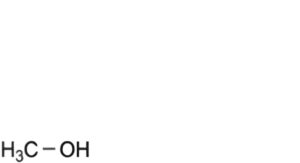
E. methanol,
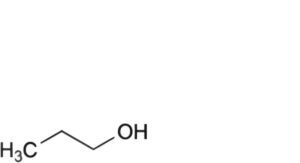
F. propan-1-ol (n-propanol).


