



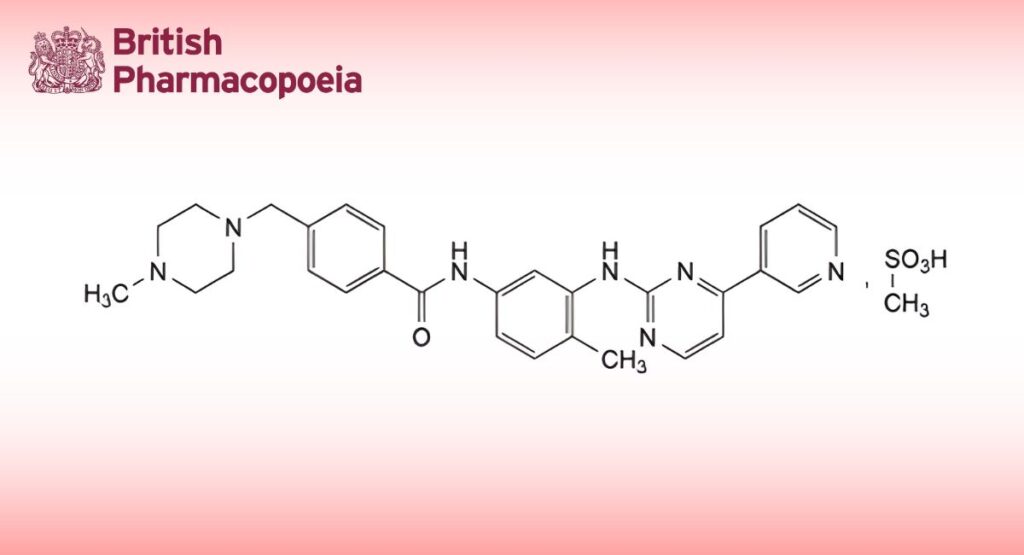
(Ph. Eur. monograph 2736)
C30H35N7SO4 589.7 220127-57-1
Action and use
Cytotoxic.
Preparations
Imatinib Capsules
Imatinib Tablets
DEFINITION
4-[(4-Methylpiperazin-1-yl)methyl]-N-[4-methyl-3-[[4-(pyridin-3-yl)pyrimidin-2-yl]amino]phenyl]benzamide methanesulfonate.
Content
98.0 per cent to 102.0 per cent (anhydrous substance).
PRODUCTION
It is considered that alkyl methanesulfonate esters are genotoxic and are potential impurities in imatinib mesilate. The manufacturing process should be developed taking into consideration the principles of quality risk management, together with considerations of the quality of starting materials, process capability and validation. The general methods 2.5.37. Methyl, ethyl and isopropyl methanesulfonate in methanesulfonic acid, 2.5.38. Methyl, ethyl and isopropyl methanesulfonate in active substances and 2.5.39. Methanesulfonyl chloride in methanesulfonic acid are available to
assist manufacturers.
CHARACTERS
Appearance
White or almost white, slightly brownish or yellowish powder; yellow or pale yellow, very hygroscopic, for the amorphous form.
Solubility
Freely soluble in water, slightly soluble in ethanol (96 per cent), practically insoluble in methylene chloride.
It shows polymorphism (5.9).
IDENTIFICATION
Infrared absorption spectrophotometry (2.2.24).
Comparison: imatinib mesilate CRS.
If the spectra obtained in the solid state show differences, dissolve the substance to be examined and the reference substance separately in anhydrous ethanol R, evaporate to dryness and record new spectra using the residues.
TESTS
Impurity F
Liquid chromatography (2.2.29) coupled with mass spectrometry (2.2.43).
Solvent mixture: acetonitrile R1, water for chromatography R (30:70 V/V).
Test solution: Dissolve 50.0 mg of the substance to be examined in the solvent mixture and dilute to 100.0 mL with the solvent mixture.
Reference solution: Dissolve 2.0 mg of imatinib impurity F CRS in the solvent mixture and dilute to 100.0 mL with the solvent mixture. Dilute 1.0 mL of the solution to 200.0 mL with the solvent mixture. Dilute 1.0 mL of this solution to 10.0 mL with the solvent mixture.
Column:
— size: l = 0.15 m, Ø = 3.0 mm;
— stationary phase: end-capped octadecylsilyl amorphous organosilica polymer for chromatography R (3.5 μm);
— temperature: 40 °C.
Mobile phase:
— mobile phase A: 1.26 g/L solution of ammonium formate R in water for chromatography R adjusted to pH 3.4-3.5 with anhydrous formic acid R;
— mobile phase B: 0.05 per cent V/V solution of anhydrous formic acid R in acetonitrile R1;
| Time (min) |
Mobile phase A (per cent V/V) |
Mobile phase B (per cent V/V) |
| 0 – 6 | 80 | 20 |
| 6 – 10 | 80 → 20 | 20 → 80 |
| 10 – 15 | 20 | 80 |
NOTE: MS acquisition can be started at 3.5 min and stopped at 6 min; during non-acquisition the eluent is directed to waste.
Flow rate: 0.5 mL/min.
Detection: Mass detector: the following settings have been found to be suitable and are given as examples; if the detector has different setting parameters, adjust the detector settings so as to comply with the system suitability criterion:
— ionisation: ESI-positive;
— detection m/z (SIM): 278.2;
— gas temperature: 350 °C;
— drying gas flow: 12 L/min;
— nebuliser pressure: 414 kPa;
— capillary voltage (Vcap): 3 kV.
Injection: 10 μL.
System suitability: Reference solution:
— signal-to-noise ratio: minimum 20 for the principal peak;
— repeatability: maximum relative standard deviation of 10 per cent determined on 6 injections.
Calculation of percentage content:
— for impurity F, use the concentration of impurity F in the reference solution.
Limit:
— impurity F: maximum 20 ppm.
Impurity H
Liquid chromatography (2.2.29).
Solvent mixture: acetonitrile R1, water for chromatography R (30:70 V/V).
Test solution: Dissolve 75.0 mg of the substance to be examined in the solvent mixture and dilute to 5.0 mL with the solvent mixture.
Reference solution (a): Dissolve the contents of a vial of imatinib impurity A CRS in 1.0 mL of the solvent mixture.
Reference solution (b): Dissolve 60.0 mg of imatinib impurity H CRS in the solvent mixture and dilute to 20.0 mL with the solvent mixture. Dilute 1.0 mL of the solution to 100.0 mL with the solvent mixture.
Reference solution (c): Dilute 5.0 mL of reference solution (b) to 50.0 mL with the solvent mixture.
Reference solution (d): Dissolve 0.150 g of the substance to be examined in the solvent mixture, add 1.0 mL each of reference solutions (a) and (b) and dilute to 10.0 mL with the solvent mixture.
Column:
— size: l = 0.25 m, Ø = 4.6 mm;
— stationary phase: end-capped octadecylsilyl silica gel for chromatography R (5 μm);
— temperature: 35 °C.
Mobile phase:
— mobile phase A: dissolve 2.3 g of sodium octanesulfonate monohydrate R in 700 mL of water for chromatography R and add 300 mL of acetonitrile R1 and 1.2 mL of dilute phosphoric acid R;
— mobile phase B: dissolve 2.3 g of sodium octanesulfonate monohydrate R in 100 mL of water for chromatography R and add 900 mL of acetonitrile R1 and 1.2 mL of dilute phosphoric acid R;
| Time (min) |
Mobile phase A (per cent V/V) |
Mobile phase B (per cent V/V) |
| 0 – 6 | 98 | 2 |
| 6 – 8 | 98 → 20 | 2 → 80 |
| 8 – 10 | 20 | 80 |
Flow rate: 2.3 mL/min.
Detection: Spectrophotometer at 227 nm.
Injection: 10 μL of the test solution and reference solutions (c) and (d).
Identification of impurities: Use the chromatogram obtained with reference solution (d) to identify the peaks due to impurities A and H.
Relative retention: With reference to imatinib (retention time = about 8 min): impurity A = about 0.17; impurity H = about 0.2.
System suitability Reference solution (d):
— resolution: minimum 1.5 between the peaks due to impurities A and H.
Calculation of percentage content:
— for impurity H, use the concentration of impurity H in reference solution (c).
Limit:
— impurity H: maximum 0.02 per cent.
Related substances
Liquid chromatography (2.2.29).
Solvent mixture: acetonitrile R1, water for chromatography R (30:70 V/V).
Test solution: Dissolve 25.0 mg of the substance to be examined in the solvent mixture and dilute to 50.0 mL with the solvent mixture.
Reference solution (a): Dilute 1.0 mL of the test solution to 100.0 mL with the solvent mixture. Dilute 1.0 mL of this solution to 10.0 mL with the solvent mixture.
Reference solution (b): Dissolve 1 mg of imatinib for system suitability CRS (containing impurities A, B, C, D and J) in the solvent mixture and dilute to 2 mL with the solvent mixture.
Reference solution (c): Dissolve 25.0 mg of imatinib mesilate CRS in the solvent mixture and dilute to 50.0 mL with the solvent mixture.
Column:
— size: l = 0.25 m, Ø = 4.6 mm;
— stationary phase: end-capped octadecylsilyl silica gel for chromatography R (5 μm);
— temperature: 35 °C.
Mobile phase:
— mobile phase A: dissolve 2.3 g of sodium octanesulfonate monohydrate R in 700 mL of water for chromatography R
and add 300 mL of acetonitrile R1 and 1.2 mL of dilute phosphoric acid R;
— mobile phase B: dissolve 2.3 g of sodium octanesulfonate monohydrate R in 100 mL of water for chromatography R and add 900 mL of acetonitrile R1 and 1.2 mL of dilute phosphoric acid R;
| Time (min) |
Mobile phase A (per cent V/V) |
Mobile phase B (per cent V/V) |
| 0 – 16 | 98 | 2 |
| 16 – 30 | 98 → 50 | 2 → 50 |
Flow rate: 2.3 mL/min.
Detection: Spectrophotometer at 267 nm.
Injection: 10 μL of the test solution and reference solutions (a) and (b).
Identification of impurities: Use the chromatogram supplied with imatinib for system suitability CRS and the chromatogram obtained with reference solution (b) to identify the peaks due to impurities A, B, C, D and J.
Relative retention: With reference to imatinib (retention time = about 11 min): impurity A = about 0.2; impurity B = about 0.6; impurity J = about 0.9; impurity C = about 1.2; impurity D = about 2.3.
System suitability:
— resolution: minimum 3.0 between the peaks due to imatinib and impurity C in the chromatogram obtained with reference solution (b);
— signal-to-noise ratio: minimum 45 for the principal peak in the chromatogram obtained with reference solution (a);
— peak-to-valley ratio: minimum 1.3, where Hp = height above the baseline of the peak due to impurity J and Hv = height above the baseline of the lowest point of the curve separating this peak from the peak due to imatinib in the chromatogram obtained with reference solution (b).
Calculation of percentage contents:
— correction factors: multiply the peak areas of the following impurities by the corresponding correction factor: impurity A = 2.2; impurity B = 2.0;
— for each impurity, use the concentration of imatinib mesilate in reference solution (a).
Limits:
— impurity C: maximum 0.3 per cent;
— impurity D: maximum 0.2 per cent;
— impurities A, B: for each impurity, maximum 0.15 per cent;
— unspecified impurities: for each impurity, maximum 0.10 per cent;
— total: maximum 0.8 per cent;
— reporting threshold: 0.05 per cent.
Water (2.5.12)
Maximum 3.0 per cent, determined on 1.00 g.
Sulfated ash (2.4.14)
Maximum 0.1 per cent, determined on 1.0 g.
ASSAY
Liquid chromatography (2.2.29) as described in the test for related substances with the following modification.
Injection: Test solution and reference solution (c).
Calculate the percentage content of C30H35N7SO4 taking into account the assigned content of imatinib mesilate CRS.
IMPURITIES
Specified impurities A, B, C, D, F, H.
Other detectable impurities (the following substances would, if present at a sufficient level, be detected by one or other of the tests in the monograph. They are limited by the general acceptance criterion for other/unspecified impurities and/or by the general monograph Substances for pharmaceutical use (2034). It is therefore not necessary to identify these impurities for demonstration of compliance. See also 5.10. Control of impurities in substances for pharmaceutical use) J.
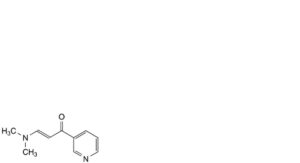
A. (2E)-3-(dimethylamino)-1-(pyridin-3-yl)prop-2-en-1-one,
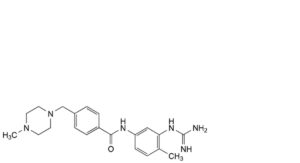
B. N-(3-carbamimidamido-4-methylphenyl)-4-[(4-methylpiperazin-1-yl)methyl]benzamide,
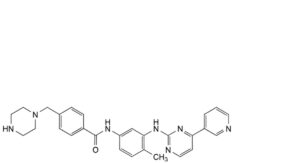
C. N-[4-methyl-3-[[4-(pyridin-3-yl)pyrimidin-2-yl]amino]phenyl]-4-(piperazin-1-ylmethyl)benzamide (desmethylimatinib),
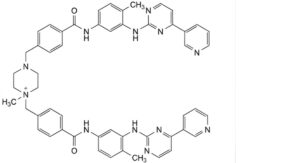
D. 1-methyl-1,4-bis[4-[[4-methyl-3-[[4-(pyridin-3-yl)pyrimidin-2-yl]amino]phenyl]carbamoyl]benzyl]piperazin-1-ium (imatinib dimer),
F. 4-methyl-N -[4-(pyridin-3-yl)pyrimidin-2-yl]benzene-1,3-diamine,
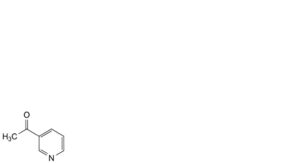
H. 1-(pyridin-3-yl)ethan-1-one,
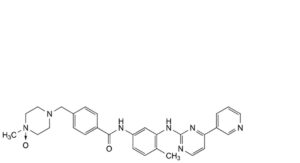
J. 4-[(4-methyl-4-oxidopiperazin-1-yl)methyl]-N-[4-methyl-3-[[4-(pyridin-3-yl)pyrimidin-2-yl]amino]phenyl]benzamide.


