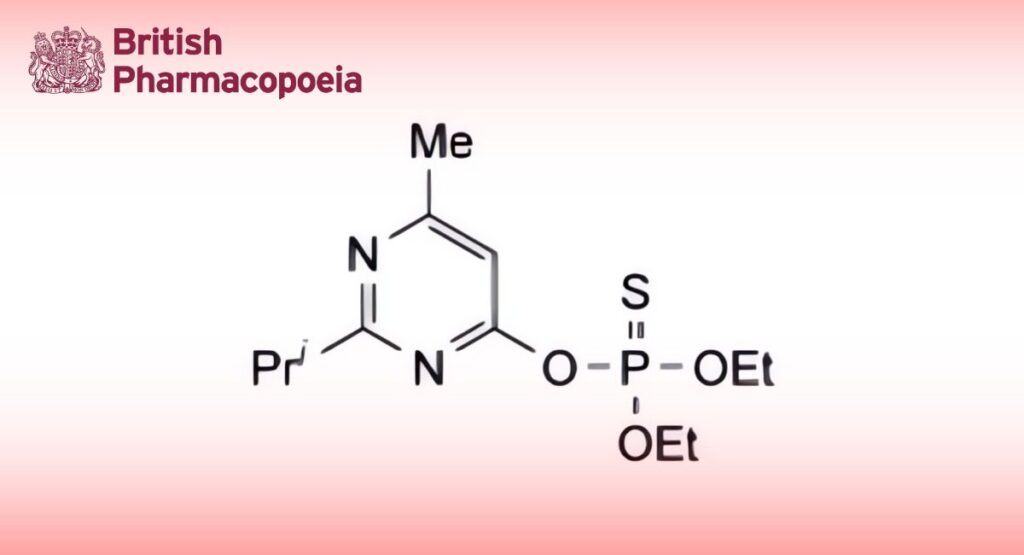
C12H21N2O3PS 304.4 333-41-5
Action and use
Insecticide.
DEFINITION
Dimpylate is O,O-diethyl O-(2-isopropyl-6-methylpyrimidin-4-yl)phosphorothioate. It contains not less than 95.0% and not more than 101.0% of C12H21N2O3PS, calculated with reference to the anhydrous substance.
It may contain suitable stabilisers such as antioxidants.
CHARACTERISTICS
A clear, yellowish brown, slightly viscous liquid.
Practically insoluble in water; miscible with ethanol (96%), with ether and with most organic solvents.
IDENTIFICATION
A. The infrared absorption spectrum, Appendix II A, is concordant with the reference spectrum of dimpylate (RSV 49).
B. In the Assay, the chromatogram obtained with solution (1) shows a peak with the same retention time as the peak due to dimpylate in the chromatogram obtained with solution (3).
TESTS
Toluene
Not more than 1% v/v when determined by the test for residual solvents, Appendix VIII L.
Related substances
Carry out the method for gas chromatography, Appendix III B, using the following solutions. Solution (1) contains 0.5% w/v of the substance being examined in dichloromethane. Solution (2) contains 0.5% w/v of the substance being examined
and 0.025% w/v of diethyl phthalate (internal standard) in dichloromethane. Solution (3) contains 0.0020% w/v of the substance being examined and 0.025% w/v of diethyl phthalate in dichloromethane. Solution (4) contains 0.5% w/v of dimpylate for chromatography BPCRS and 0.025% w/v of diethyl phthalate in dichloromethane. Solution (5) contains 0.012% v/v of toluene in dichloromethane.
The chromatographic procedure may be carried out using (a) a fused silica capillary column (15 m × 0.32 mm) coated with a 1 μm film of dimethyl silicone gum (SE-54 is suitable) fitted with a precolumn (0.2 m × 0.53 mm) coated with a 1 μm film of dimethyl silicone gum, the temperature programme described below with the inlet port at room temperature and the detector at 280° and (b) hydrogen as the carrier gas at a flow rate of 40 mL per minute and nitrogen as the make up gas with a flow rate of 50 mL per minute.
In the chromatogram obtained with solution (3) the retention time of the internal standard is about 18.5 minutes and of dimpylate, about 23 minutes. The test is not valid unless the chromatogram obtained with solution (4) closely resembles that supplied with dimpylate for chromatography BPCRS.
In the chromatogram obtained with solution (2) identify any peaks corresponding to 4-ethoxy-2-isopropyl-6- methylpyrimidine, O,O,S-triethyl phosphorothioate, 3-ethyl-2-isopropyl-6-methyl-4-oxo-3,4-dihydropyrimidine, tetraethyl thionopyrophosphate, tetraethyl dithionopyrophosphate and O,O-diethyl O-(2-isopropyl-6-methylpyrimidin-4-yl)phosphate from the chromatogram supplied with dimpylate for chromatography BPCRS. The area of any peak corresponding to 4- ethoxy-2-isopropyl-6-methylpyrimidine or 3-ethyl-2-isopropyl-6-methyl-4-oxo-3,4-dihydropyrimidine is not greater than 2.5 times the area of the peak due to dimpylate in the chromatogram obtained with solution (3) (1% of each), the area of any peak corresponding to O,O,S-triethyl phosphorothioate is not greater than 1.25 times the area of the peak due to dimpylate in the chromatogram obtained with solution (3) (0.5%), the area of any peak corresponding to tetraethyl thionopyrophosphate is not greater than 0.02 times the area of the peak due to dimpylate in the chromatogram obtained with solution (3) (0.02%, assuming a response factor of 0.4), the area of any peak corresponding to tetraethyl dithionopyrophosphate is not greater than 0.25 times the area of the peak due to dimpylate in the chromatogram obtained with solution (3) (0.2%, assuming a response factor of 0.5), the area of any peak corresponding to O,O-diethyl O-(2-isopropyl-6-methylpyrimidin-4yl)phosphate is not greater than 0.75 times the area of the peak due to dimpylate in the chromatogram obtained with solution (3) (0.3%) and the area of any other secondary peak is not greater than 0.5 times the area of the peak due to dimpylate in the chromatogram obtained with solution (3) (0.2%). Disregard any peak corresponding to toluene.
Water
Not more than 0.1% w/w, Appendix IX C. Use 2 g.
ASSAY
Carry out the method for gas chromatography, Appendix III B, using solutions in 4-methylpentan-2-one containing (1) 0.2% w/v of the substance being examined, (2) 0.2% w/v of the substance being examined and 0.15% w/v of diethyl phthalate (internal standard) and (3) 0.2% w/v of dimpylate BPCRS and 0.15% w/v of diethyl phthalate.
The chromatographic procedure may be carried out using (a) a fused silica capillary column (15 m × 0.53 mm) coated with a 1.5 μm film of dimethyl silicone gum (SE-54 from J & W Scientific is suitable) at a temperature of 110° increasing linearly at a rate of 6° per minute to 215° with the inlet port at 250° and the detector at 250° and (b) helium as the carrier gas at a flow rate of 20 mL per minute with nitrogen as the make up gas with a flow rate of 10 mL per minute.
The assay is not valid unless, in the chromatogram obtained with solution (3), the resolution factor between the peaks due to dimpylate and the internal standard is at least 2.
Calculate the content of C12H21N2O3PS from the chromatograms obtained and using the declared content of C12H21N2O3PS in dimpylate BPCRS.
IMPURITIES
The impurities limited by the requirements of this monograph include:
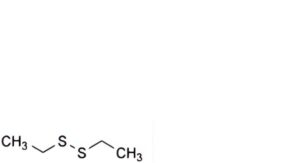
A. Diethyl disulfide,
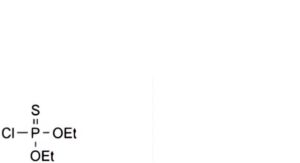
B. O,O-Diethyl chlorophosphorothioate,
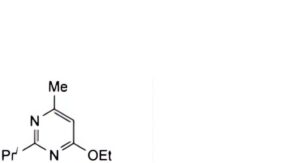
C. 4-Ethoxy-2-isopropyl-6-methylpyrimidine,
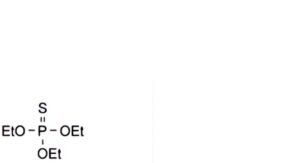
D. O,O,O-Triethyl phosphorothioate,
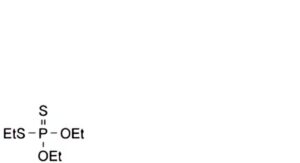
E. O,O,S-Triethyl phosphorothioate,
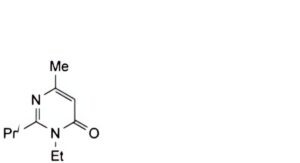
F. 3-Ethyl-2-isopropyl-6-methyl-4-oxo-3,4-dihydropyrimidine,
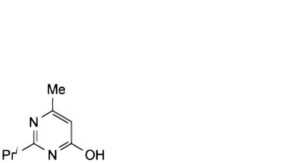
G. 4-Hydroxy-2-isopropyl-6-methylpyrimidine,
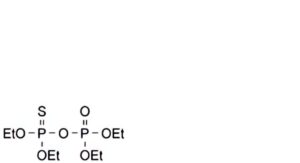
H. Tetraethyl thionopyrophosphate,
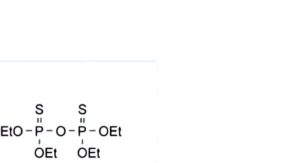
I. Tetraethyl dithionopyrophosphate,
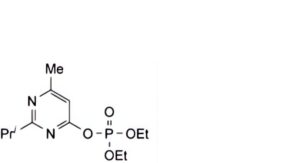
J. O,O-Diethyl O-(2-isopropyl-6-methylpyrimidin-4-yl)phosphate,
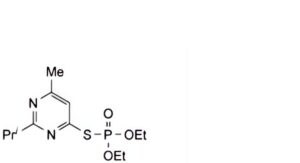
K. O,O-Diethyl S-(2-isopropyl-6-methylpyrimidin-4-yl)phosphorothiophate,
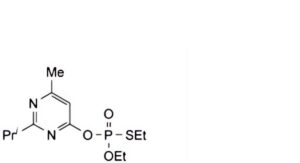
L. O,S-Diethyl O-(2-isopropyl-6-methylpyrimidin-4-yl)phosphorothiophate,
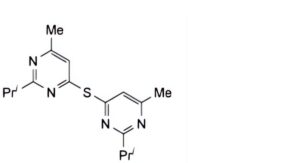
M. Bis(2-isopropyl-6-methylpyrimidin-4-yl) sulfide,
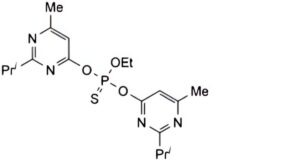
N. O-ethyl O,O-(2-isopropyl-6-methylpyrimidin-4-yl)phosphorothiophate.